Legacy Project

The Legacy Project is an oral history project of KoreanAmericanStory.org. The concept of the Legacy Project is to provide the Korean American community an easy turnkey process to capture the stories of individuals and families through video recordings. All full-length Legacy Project recording will be archived at the Digital Archives at the University of Southern California’s Korean Heritage Library for academic research and to benefit future generations.
Legacy Project Videos
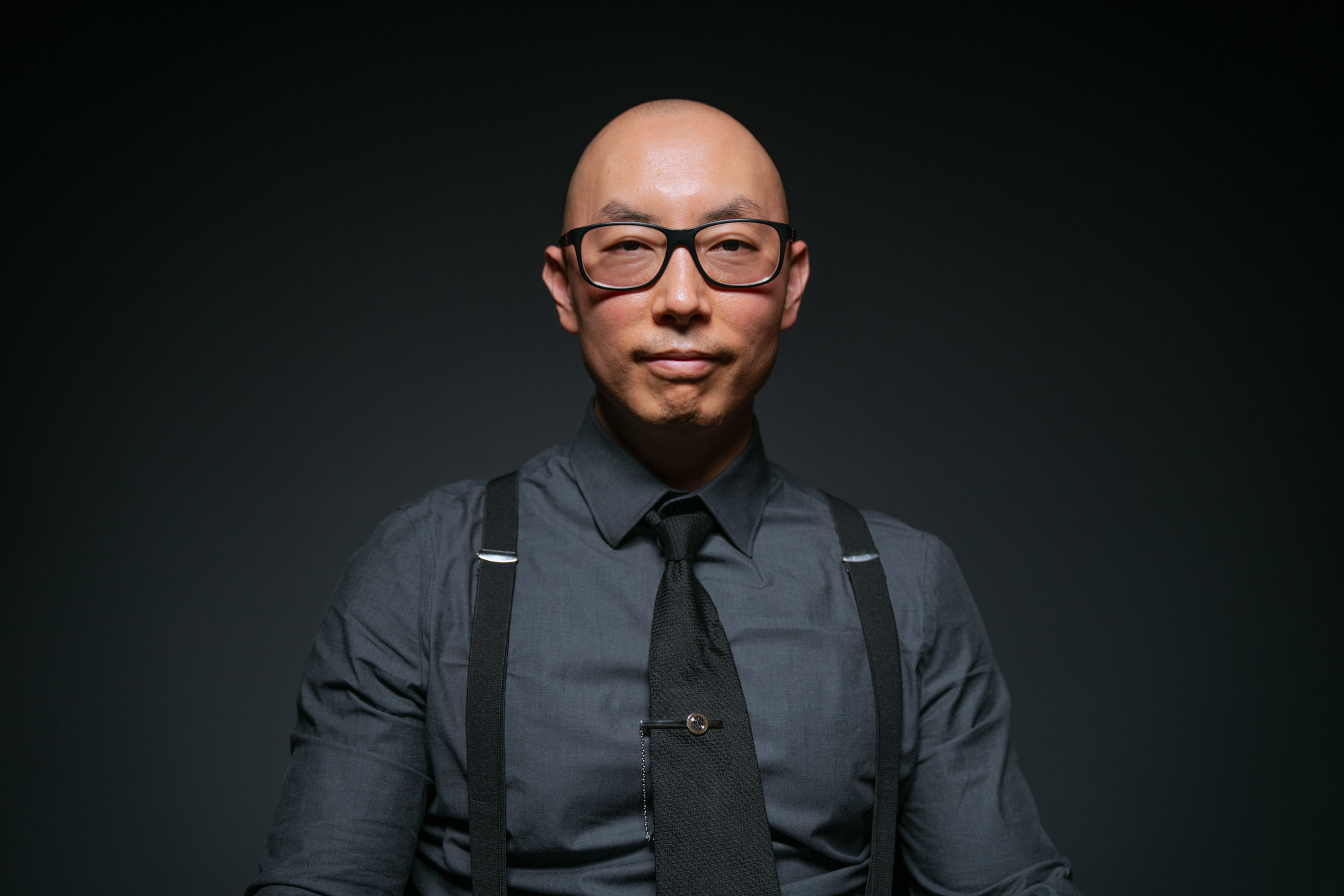
Jason Cho
Jason Cho was born and raised in Houston, Texas, in the Aleaf area. His father owned a Taekwondo School business and was the first to do so in the 70s in their respective area. All his life he trained in Taekwondo at the Dojang which helped him develop strong qualities that show in his leadership. Jason’s introduction to the hospitality industry is owed to his sister and his love for food. While visiting his sister in New York, he tried Korean Fried Chicken for the first time and decided to bring it into Houston after realizing that he would be the first one to do so. It was an all-in situation for Jason and he persevered through his journey through the lessons he learned with Taekwondo. Discipline, structure, leading by example, and being a man of action are only some of what he learned. Jason now aspires to be a representation of Korean concepts in Houston through his restaurant Dak & Bop and carry on his father’s dream of buying land and building a community by creating a Koreatown in his city in the future.

Joseph Yoo
Joseph Yoo was born in Korea and immigrated to California with his parents when he was 6. Coming from a family of ministers, Joseph recounts grappling with the expectations to follow in his father’s pastoral footsteps, which he initially resisted before discovering his own personal calling to serve the church. As an adult, he describes family life with his wife and son, underscoring the challenges of embracing unconventional paths. He finds inspiration in their son’s remarkable ability to find joy in life’s simplest pleasures and reflects on the connection between joy and holiness. His story invites us to explore the intricacies of identity, resilience, and the transformative power of familial love while also serving as a testament to the unpredictability of life and the beauty that unfolds when one embraces the unexpected.

Kaein Oh
Kaein Oh was born in Korea in 1954 and immigrated to Chicago in September 1985, joining her extended family who had already been here earlier. Originally an Estee Lauder staff member in Korea, she could have chosen to be transferred to another job in the US. Despite this, she decided to follow a sudden urge to open a Korean restaurant, going against the opposition from her sisters. Owning a restaurant was not easy, as she was met with constant work and rough times. But a newfound faith in Christianity and a strong trust in her employees helped her persevere; the work never overwhelmed or scared her. Her 24/7 work days turned into 20 years in the blink of an eye and her once 9-item long menu at the very first opening grew to 85 when they closed down. After closing her restaurant, she started a catering business which she believes is her calling: “making food honestly and in turn making her proud of what she makes.” Her son now follows in her footsteps and also has a food business of his own, in which Oh helps make kimchi. Meeting God and peace led her to feel constant happiness, which her sons could see radiating from her.

Andrew Kim
Andrew Ungal Kim takes us on a poignant journey from his early years in Gyeonggi-do, Anyang-si, Korea, where childhood was spent playing soccer and badminton with neighborhood friends. Moving to a town just outside of Baton Rouge, Louisiana, at age 14, Andrew was initially enthralled by the American dream but soon confronted the reality of adapting to a new country with a different culture and language. As he navigated this challenging period, Andrew grappled with both his station as a new immigrant to the country, as well as a self-reckoning with his own sexuality. Raised in a Christian environment, he initially tried to suppress his feelings through prayer, hoping they would eventually fade away. However, at 27, he met someone in Baton Rouge, Louisiana, and fell in love, forcing him to accept his true self.
Andrew’s journey also reflects the complexities of being open about his sexuality. While he had a nine-year relationship, he struggled to reveal it to his own side of the family and friends, causing a sense of isolation. Eventually his mother discovered the truth, challenging their relationship. Through it all, Andrew is grateful for the acceptance he found in some corners of his community (including some members of his congregation), emphasizing the ongoing process of self-discovery and the importance of understanding and embracing one’s true identity.

Tiffany Justice
Born and raised in West Point, Utah, Tiffany grew up in a family which was rather distinct from those of her peers. As a biracial woman whose mother was Korean and father was Black, she expresses an overwhelming sense of feeling “different” in an environment which was predominantly of one race and religion. Yet Tiffany relishes in memories of her “very Korean” household, growing up with Korean food and observing Korean traditions, which she owes to her mother.
In high school, Tiffany joined the school newspaper; while in university, she continued to engage with student journalism while studying mass communication. Over the pandemic, she covered a story about local Koreans in Houston sewing masks community members, an experience that she considers pivotal in feeling accepted by the Korean community. Today, she lives in San Francisco working as an award-winning journalist, a career she values for its capacity to help those in need, bring light to unspoken issues, and affirm stories gone untold—stories such as her own.

Kyung Bin Bae
Kyung Bin Bae was born in Seoul in 1953, at the heels of the Korean War. In childhood, he recalls growing up without financial worry, though his family’s fortunes would soon run out as he began to prepare for his college entrance exams. While in university, Kyung Bin studied journalism and, following the advice of his professor, decided to pursue graduate studies after college. After graduate school, he completed his mandatory military service and made the move to Michigan State University to continue studying journalism, which was where he met his wife.
Over his first summer in America, he bought a used car and drove to New York City to find work and start building savings before returning to school; it was in the Big Apple that he’d begin his career in the clothing industry. Returning back to Michigan, he got married and had a change of heart with his journalistic aspirations, choosing to instead move to NYC after his wife’s graduation to continue work in the clothing business. Throughout the decades, he worked in a variety of operational roles for a variety of companies, sporting a variety of work cultures, but is currently enjoying retirement, which has finally afforded him the time to spend more time with his wife, children, and grandchildren.

Jackie Faye
Jackie Faye was born in Dallas, Texas to Korean immigrants; in the 1970s, her grandparents first arrived in Los Angeles, relocated to Alaska, and finally settled in Texas. Faye strongly identifies as being queer, emphasizing the importance of acceptance: of herself, and the risks that come along with it. Yet despite Jackie’s exposure to pain and violence which seek to diminish her identity, she describes her journey as having been worthwhile for the agency and freedom she’s fought for over her own experiences and aspirations. Jackie carries on her father’s passion for music by creating and engaging with music herself, a form of art that allows her to express her thoughts and feelings, as honest as she can be. She emphasizes the importance of being true to yourself in any and every way possible, paying no attention to what others might think about you.
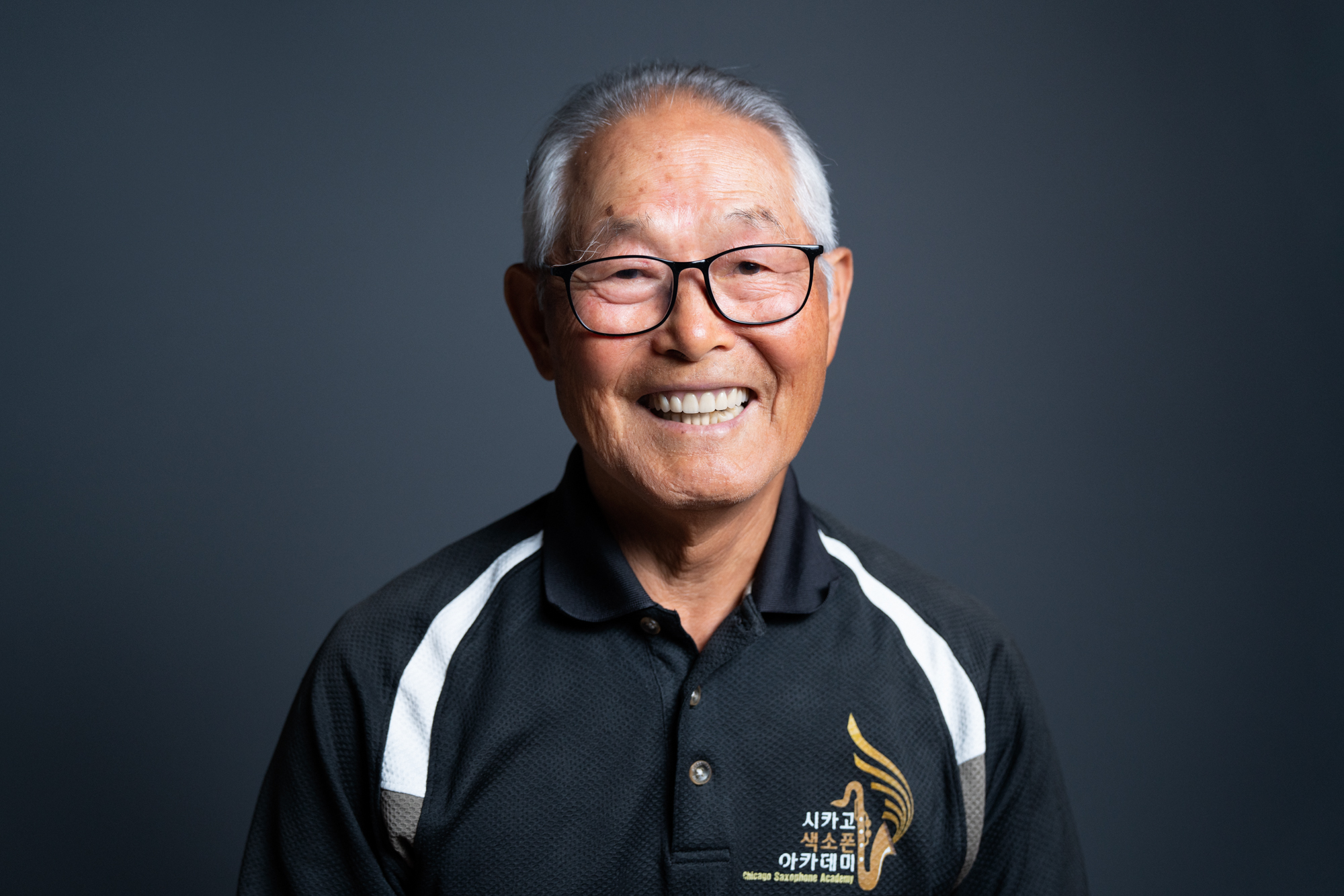
Soon Ki Bae
Soon Ki Bae, who also goes by Simon, was born in Japanese-occupied Korea in 1935 in South Jeolla Province. He recalls how the country was liberated while he was in the third grade, but political turbulence continued for much longer. The Korean War broke out when Bae was in middle school, and wartime anxiety followed him around. He was weary of police during the day, partisans at night. Political unrest would continue to spur anxiety even after the war’s end through the April 19th Revolution, and the following May 16th Coup in 1961. By chance, it was during the coup that Bae enlisted in the military to fulfill his mandatory service. After decades of turbulence at home, Bae moved to Germany to work as a contracted miner, relocating to Chicago with some friends he had made in the new country at the end of his contract. Slowly, the former miners opened restaurants, groceries, and other small businesses, building a Koreatown on the North Side of the city. Along the way, he’s been actively involved in cultural efforts such as the formation of a performing samulnori troup and even a saxophone sextet. Despite his hardships, Bae reminds us that the key to staying vibrant in one’s golden years is to continue seeking out activities that encourage youthful enthusiasm.

Becky Belcore
Becky Belcore was born in Seoul and adopted into a Minnesotan family when she was one year old. She lived there until her family moved to the southern states of Virginia and, eventually, Alabama. Growing up in all-white communities was very challenging– Becky even once believed that Korea didn’t exist because she had never seen anybody who looked like her growing up.
Through a passion for activism and organizing she found during college, Becky connected with peers like herself and eventually her Korean heritage through her area’s Korean American Resource and Cultural Center (KRCC). Although it was tough for her to get used to the space, the lens of social justice she discovered at the center encouraged her to stay; the present marks her 26th year of involvement with KRCC and her 6th year as the co-director for the National Korean American Service & Education Consortium (NAKASEC).