




Letters to My Hometown: Kim Rogers Family
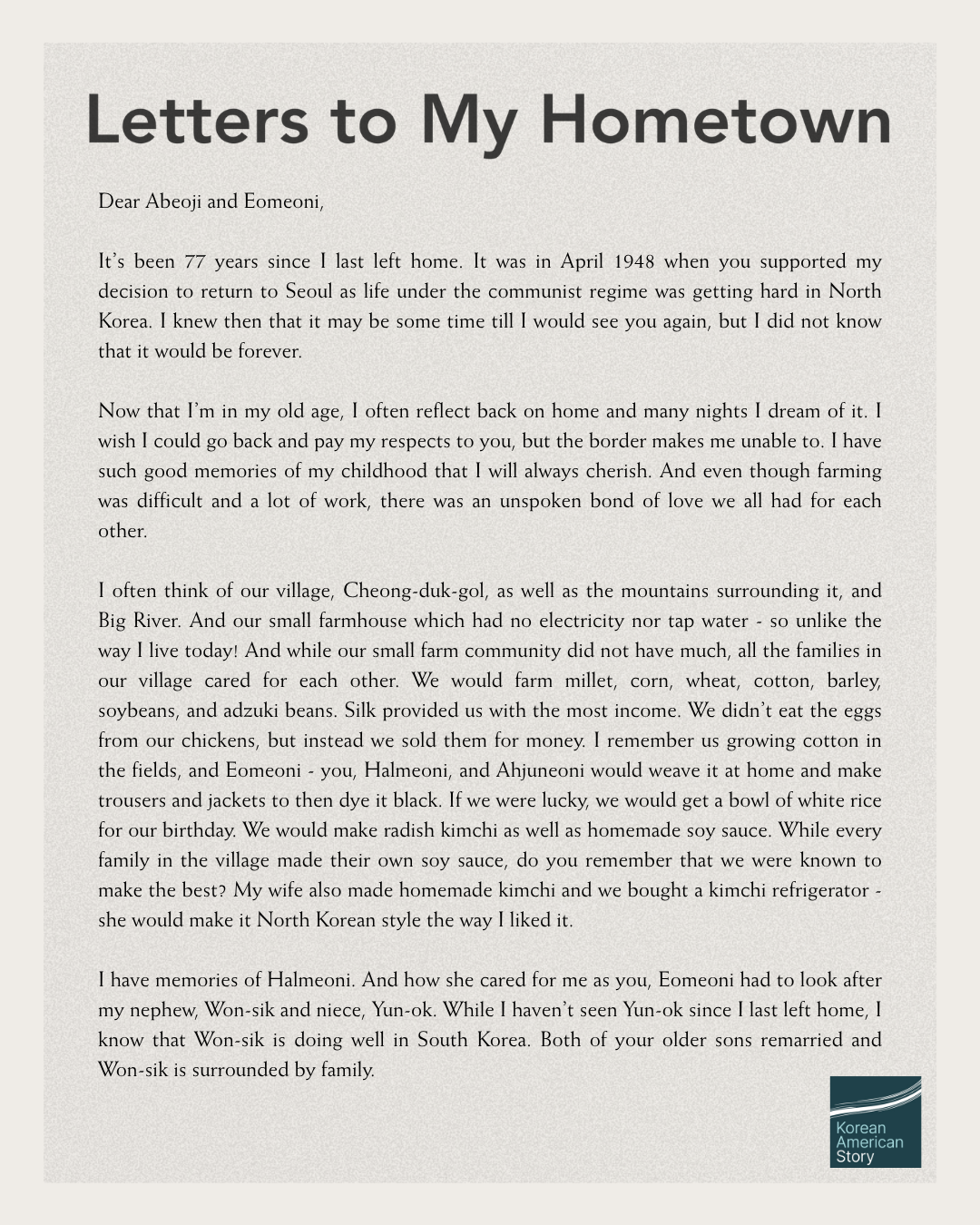
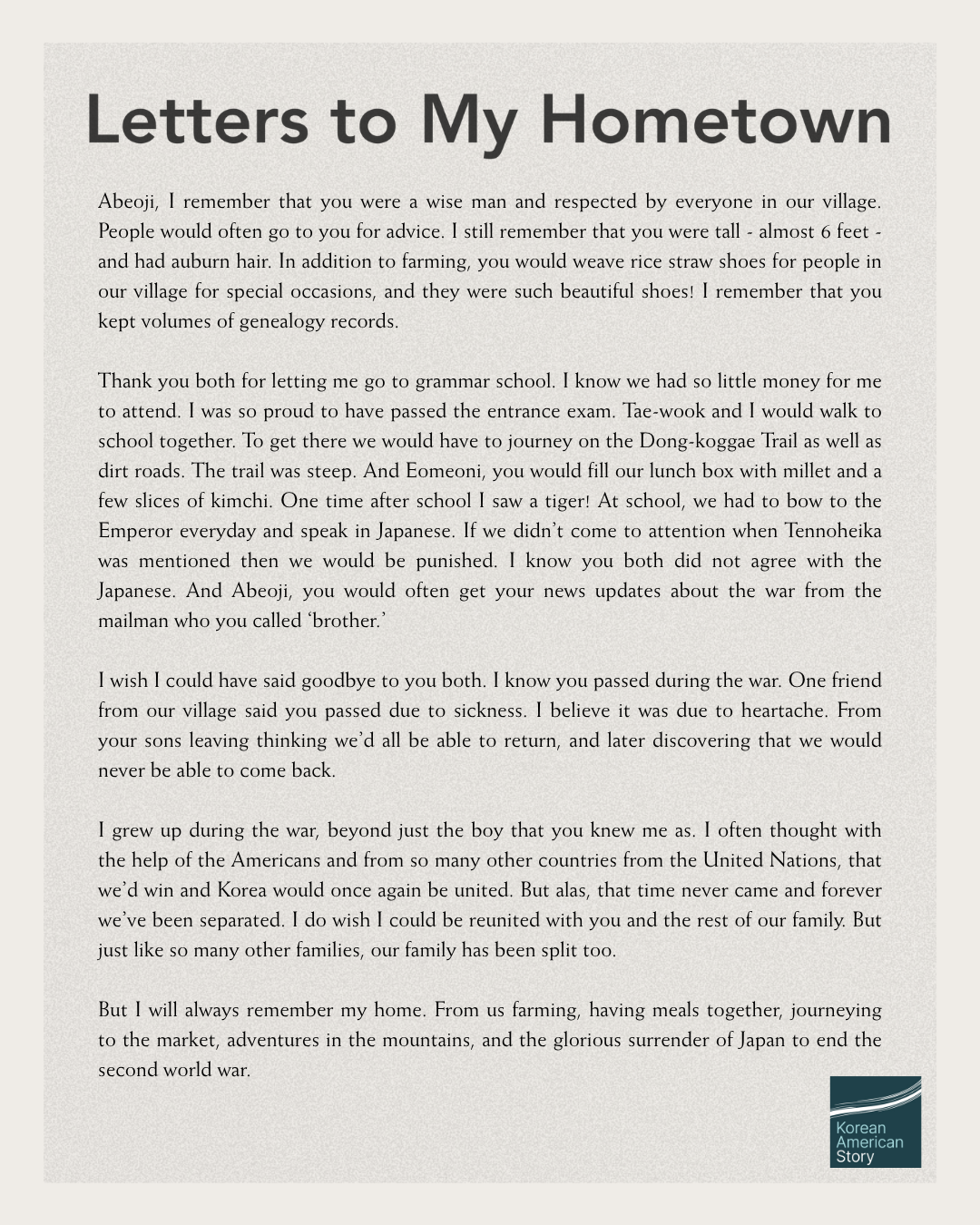
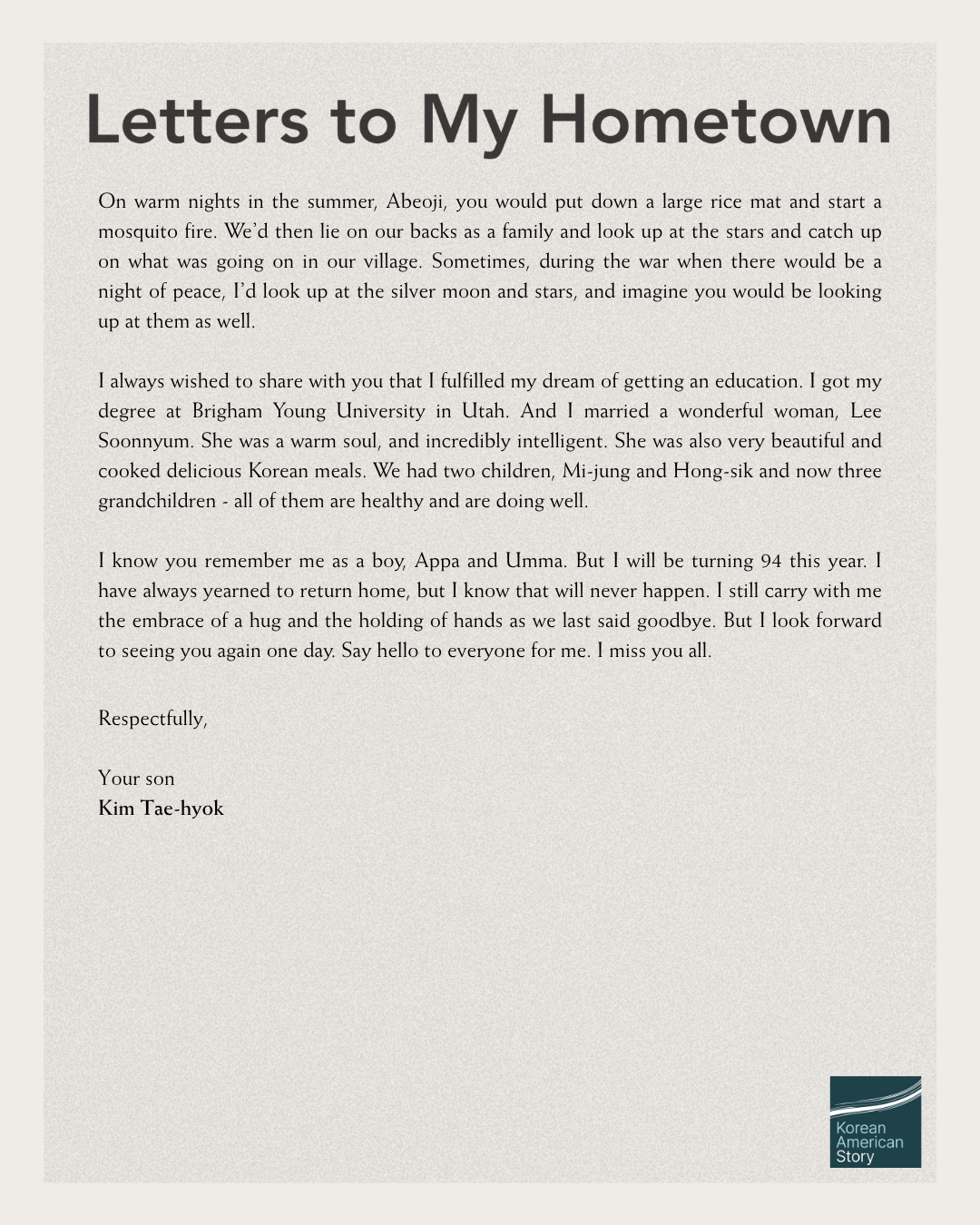
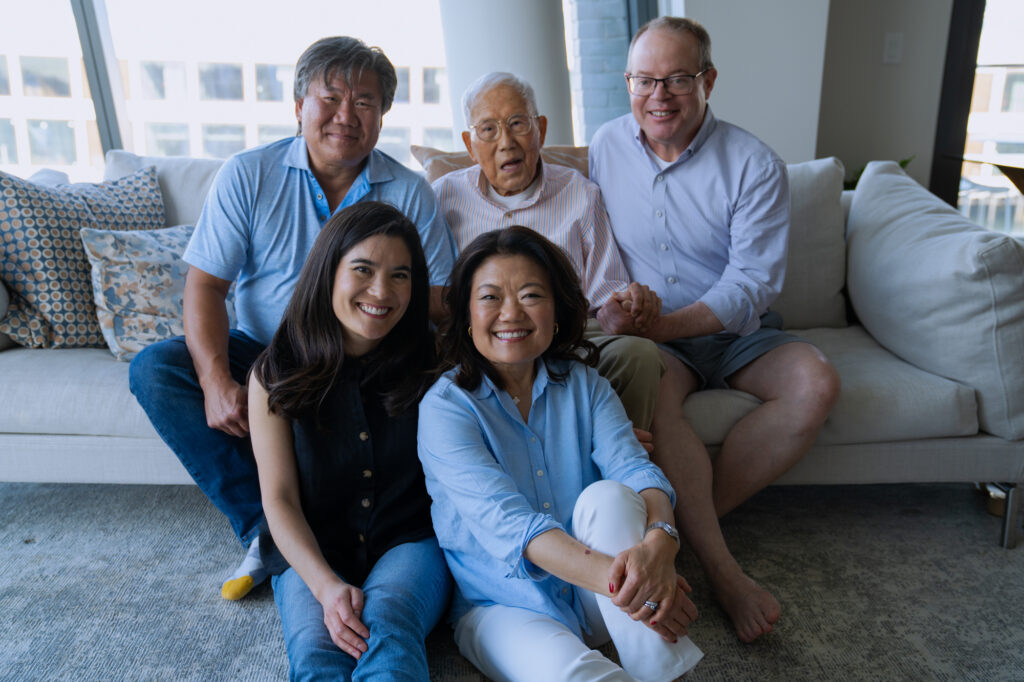
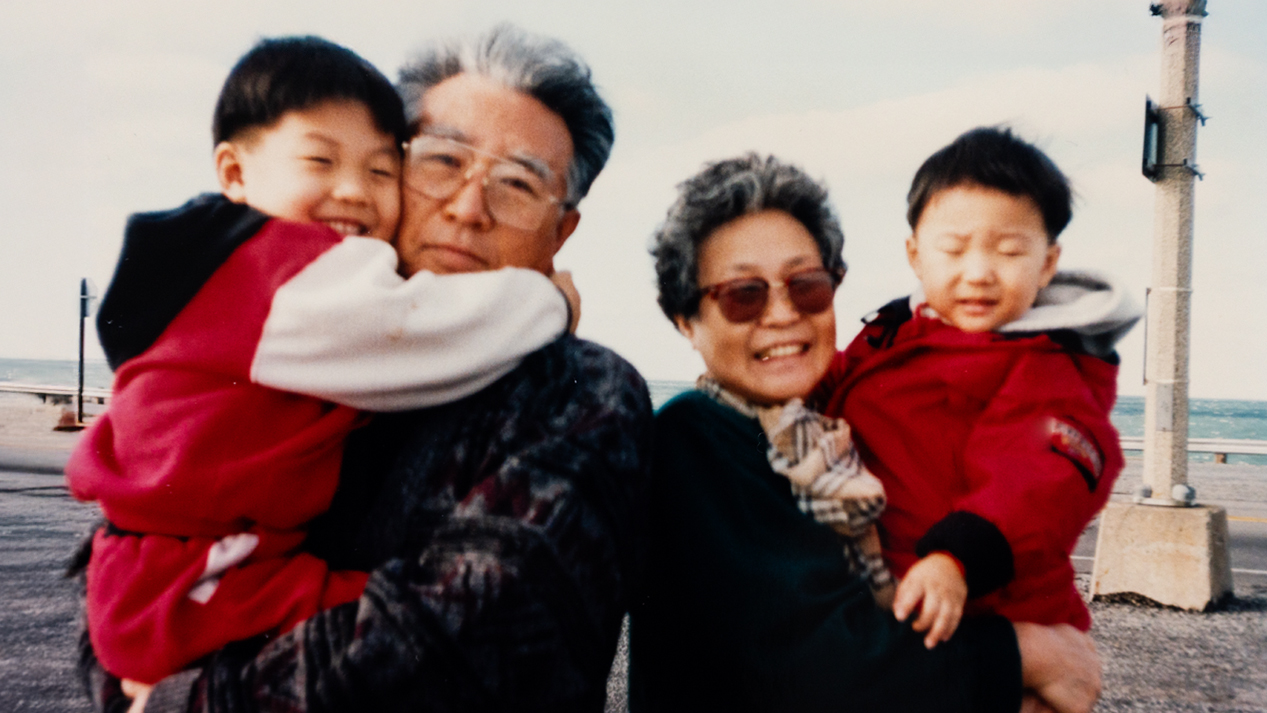
Tae-hyok Kim is joined by his children, Michelle and Harold, as well as his granddaughter Nicole, in a conversation on the archival, therapeutic, and familial importance of passing down stories. For Tae, the story began seventy-seven years ago when he left his village, Cheong-duk-gol, for Seoul, not realizing that his departure from home would become permanent amidst the backdrop of the Korean War. Embedded into this story are accounts of cold, harsh winters which prevented his family from collectively crossing into the South, alongside memories of home-cooked meals shared with family in his rural farming community.
This history, once a series of detailed stories told during a long family drive from Utah to New Jersey, served both as an anchoring point for his children and grandchildren’s identities, as well as reparative acts of therapy for Tae-hyok himself. An enthusiastic writer, Tae-hyok typed out his life experiences across hundreds of pages, though in 2018, a stroke left Tae-hyeok with a significant speech impairment, fundamentally changing how he communicated but not his determination to share his legacy. During the pandemic, Nicole interviewed him for thirty minutes a day to fill the gaps in his original manuscripts, determined to understand her grandfather and the world he navigated, transforming family lore into something permanently legible and accessible for others to read.
Through their collaboration, they produced a book which captured Tae’s central philosophy: that one must always have a goal, but also a dream—because once a goal is achieved, the dream becomes the next goal to pursue. Today, the family views their history not as a fading memory, but as a documented testament to endurance. Together, Michelle, Harold, and Nicole express gratitude to Tae-Hyok for never ceasing to share his story with them.
The 75 years of division and conflict from the Korean War have not only affected the first generation, who still long for their hometowns in North Korea, but also younger generations who have no memories of the conflict, yet many of whom have inherited the weight of uncertainty and the mission of searching for missing relatives.
This iteration of Letters to My Hometown invites audiences to listen and reflect upon intergenerational conversations of the Korean American community whose divided families have sustained the traumas of their homeland’s partition. Generously supported by American Friends Service Committee (@afsc_org), these conversations aim to take steps toward transforming the intergenerational traumas of the Korean War into opportunities for collective remembering, learning, and healing.