Legacy Project

The Legacy Project is an oral history project of KoreanAmericanStory.org. The concept of the Legacy Project is to provide the Korean American community an easy turnkey process to capture the stories of individuals and families through video recordings. All full-length Legacy Project recording will be archived at the Digital Archives at the University of Southern California’s Korean Heritage Library for academic research and to benefit future generations.
Legacy Project Videos

Alison Choi
Alison Choi was born and raised in Hong Kong, before permanently moving to the United States in 2015. Both of her parents grew up in the United States, and her American roots, coupled with her Korean heritage, gave her a unique cultural identity. While Ms. Choi felt in tune with her American identity, her Korean one was harder to reconcile with growing up in Hong Kong due to the relative lack of Korean-Americans in her community. It wasn’t until she began attending college that she was able to more directly confront and understand her Asian-American identity. She first immersed herself in the history of different ethnic groups in the United States before delving into Asian-American studies. Ms. Choi began to document stories not only about her own family but also about the intersection and interaction between Korean-American and Black communities. Her journey of discovering and exploring her identity speaks to her sense of purpose and her motivation to contribute to the community she is a part of.
All content has been recorded in advance prior to the US outbreak of COVID-19.
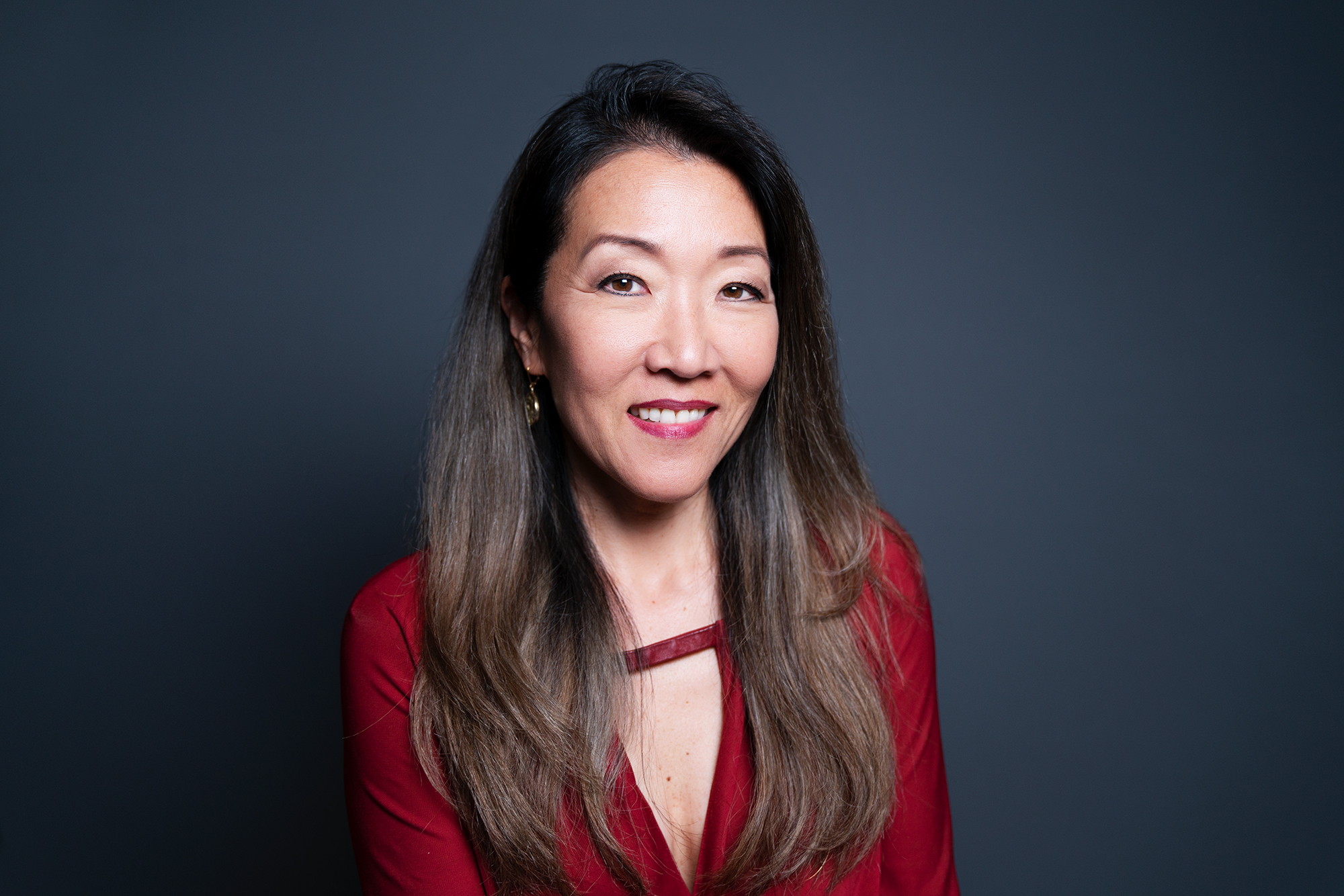
May Lee
Born in Columbus, Ohio in 1966, May Lee faced a significant amount of bullying and discrimination growing up as an Asian American in her neighborhood. Like any other child, she sought to fit in and assimilate with the rest of her community. However, these challenges would build her character and the experiences she was able to bring to the table as a journalist. After realizing that medical school was not the right path for her, she was guided by her religious faith and began to pursue a career in broadcast journalism. Ms. Lee’s perseverance helped her secure her first job in Redding, California, despite the widespread anti-Japanese and anti-Asian sentiments of the time. At one point in her career, she confronted a group of verbally abusive and racist men while conducting coverage on a protest in Dayton, Ohio. Today, she hosts her own podcast, called The May Lee Show, that digs deeper into Asian and Asian American stories through open, honest, conversation. Her process of learning to embrace her own identity and combating racism throughout her life has shaped her devotion to social justice, truth-telling, and speaking up for the voiceless.

Nancy Yoon
The youngest of five daughters, Nancy Yoon grew up in Koreatown, Los Angeles during the 1970’s, after immigrating to the United States at the age of four with the rest of her family. As an adult, Ms. Yoon worked in finance for a while before transitioning to more creative work in the entertainment industry. About twenty years ago, Ms. Yoon struggled with the death of her father which led her to take care of her single mother until she eventually passed in a car accident. Ms. Yoon speaks about the experience of seeing her mother’s spirit in several separate instances. Following her mother’s sudden death, Ms. Yoon felt a strong desire to change her life and eventually got more involved in the Korean American community in Los Angeles which led her to start Asians In LA (@AsiansinLA) – a social network of Asian American influencers in politics, entertainment, nonprofit and community leaders. Empowered by her unshakable faith, she tells a story that demonstrates the power of connection and the importance of representation.

Joseph Jeon
Joseph Jeon was born in Seoul, South Korea in 1971. Two years later, his family immigrated to the United States when his father entered a medical residency program in Barberton, Ohio. Currently a professor of English at the University of California, Irvine, he is also the director of the UCI Center for Critical Korean Studies, an institution aiming to centralize Korean Studies at the university and support students and faculty in their work. His experience of raising a daughter has helped him discover how racial dynamics in American communities have shifted over the past few decades and provided him with a positive outlook on the future. His process of learning how the different places in a person’s life shape the culture in which they grow up has, in turn, helped strengthen his commitment to contribute to his community. All content has been recorded in advance prior to the US outbreak of COVID-19.

Alexander Kim
A member of Generation X and a second-generation Korean-American, Alexander Kim was born in Los Angeles. He currently works as a consultant working with local government in order to connect government and local communities, businesses, and nonprofit organizations. The 1992 L.A. “Saigu” riots had a significant impact on his passion for political science as he came to realize that there was a need for Asian-American leaders in office, not only in L.A. but also throughout the United States. After his college education at UC Irvine, Mr. Kim took his first job working for the city of L.A. at the mayor’s office. Throughout his 15-year career in politics, he gained experience working with different communities of people from all different kinds of backgrounds. His commitment to making his community a better place is a testament to his extraordinary drive and dedication.

Linda Chen
Linda Chen was born in the United States, a few years after her parents immigrated to America and began operating a grocery store in East L.A. Growing up in a predominantly white school community in Arcadia, Mrs. Chen remembers her struggle to discover and embrace her identity. As a girl, she taught herself how to read and write in Korean and continued to take Korean classes in college at George Washington University. In college, she decided to participate in a summer program at Yonsei University in South Korea. Once there, however, she experienced the discomfort of prejudice against “foreigners” and became the victim of a traumatic assault. Despite all this, Mrs. Chen has maintained her love for her culture and her belief that one can be anything they desire. Her story is one that explores the importance and power of identity.

Stephen Gill
Stephen Gill was born in the rural area of Geumsan, South Korea as Gill Moon Geun. After graduating from high school in the city of Daejeon, he attended Seoul Business College and Graduate School. After working as an employee of a government-owned business in Tokyo, then New York, he decided to remain in the United States for the sake of his children and their education. Several years later, Mr. Gill began to operate a Hallmark card store, continuing to support his children through three harrowing robberies and other challenges. In 1987, he became an American citizen. Mr. Gill is no stranger to hardship and adversity, but his story demonstrates the overwhelming power of courage and family.

Stella Gill
Stella Gill was attending kindergarten and learning how to play the piano when she recalls the Korean War breaking out when she was just 4 years old. After several years of living as refugees, her family finally returned home only to find that their father never came back. Stella went on to get married and settled with her new family in America. However, 25 years ago, she received a mysterious letter in the mail sent from North Korea that turned out to be her long lost father. Communicating through letters until his death, she describes the emotions she felt at that time learning about her father’s new life and family.

Kwan Chung
Kwan Ho Chung was born in South Korea in 1937, during the year the Second Sino-Japanese War began. Growing up, he heard stories from his mother about his father’s college education in the United States at the University of Pennsylvania. He made his way to America to retrace his father’s journey, visiting the University of Pennsylvania campus in person and learning about his father’s educational history there. Mr. Chung would spend years piecing together his father’s story in America and publish a biography titled “Father’s Footsteps.” Eventually, Mr. Chung would also come to live in the United States, in search of more opportunities for his sons and a new life in a new country. His father’s story motivated Mr. Chung to seek opportunity and fulfill his own ambitions, continuing a remarkable legacy of determination and perseverance.