Legacy Project
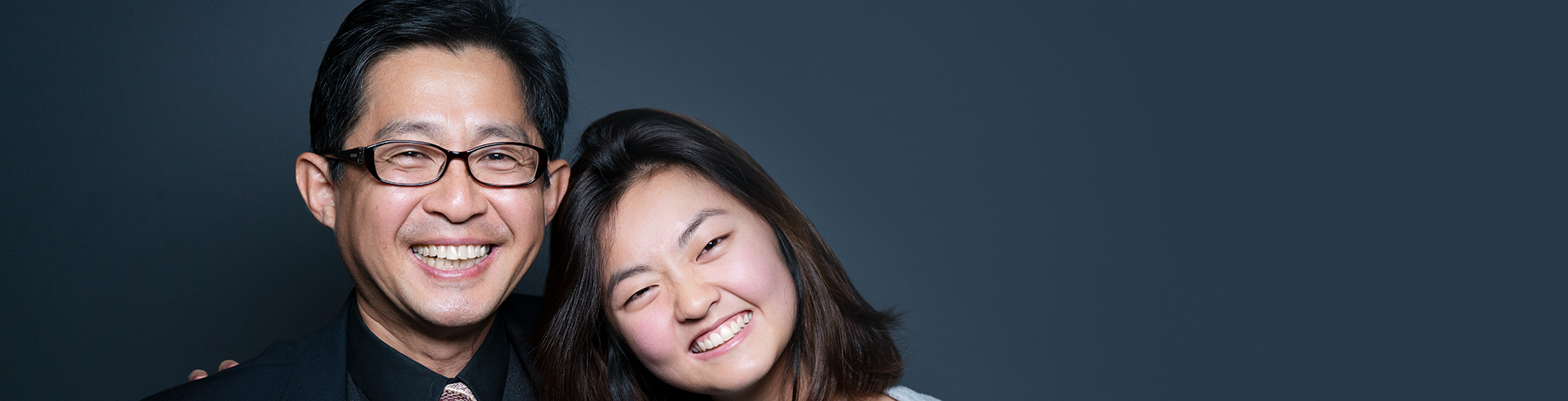
The Legacy Project is an oral history project of KoreanAmericanStory.org. The concept of the Legacy Project is to provide the Korean American community an easy turnkey process to capture the stories of individuals and families through video recordings. All full-length Legacy Project recording will be archived at the Digital Archives at the University of Southern California’s Korean Heritage Library for academic research and to benefit future generations.
Legacy Project Videos

Sangmin Lee
The son of a pastor, Sangmin moved from Korea to McLean, Virginia at a young age. Reflecting on his parents’ struggle to provide for their family, Sangmin resolved to become an entrepreneur and make a lot of money. However, after moving to Korea in his late twenties, Sangmin found a new, though familiar calling in the ministry. Following in his father’s footsteps, Sangmin became a pastor at Jubilee, a church in Seoul. Having served at Jubilee for upwards of seven years, Sangmin was made the leader of King’s Cross Church, a new, English-speaking church in Seoul created by Jubilee, where he still serves today.

Michael Hurt
Michael Hurt identifies as a visual sociologist, melding his draw towards street fashion and photography with his passion for observation and studies in race and gender. With a mixed background, his mother Korean, father African American, Michael’s interest in identity started early, carrying him through his academic years, eventually bringing him to live and work in Korea since the 1990s.

Kyu Lee
An immigrant to Mercer Island, Washington, Kyu Lee recalls not knowing anything about Korean culture aside from the obvious, he and his family were all born there. It wasn’t until after college that Kyu began to be exposed to Korean entertainment. In 2005 during a vacation to the motherland, he watched “Taegukgi: The Brotherhood of War” for the first time and was blown away. Working for Sony at the time, Kyu flew home and enthusiastically told his team about the film. It was quickly picked up and distributed in the States, making it the first Korean film screened in the U.S. entertainment market. Sparking Kyu’s pride and desire to introduce Korean content to the States, he quickly built his network from there, ultimately leaving him responsible for the U.S. viral sensation “Gangnam Style”. Life is still a crazy rollercoaster ride for Kyu as he continues to work in film and distribution. As he rolls with the punches, he hopes to continue to uplift and provide opportunities to those around him.

Kayla Kim Votapek
As an anti-racist facilitator and overall creative, Kayla Kim Votapek leads a life of perpetual acceptance of growth and movement towards understanding, but getting there has come with its own challenges. Having grown up in an Italian American family of New Jersey, Kayla found closeness at home, yet felt unseen as an adopted Korean in a mostly White upper class town. To work through questions of identity, Kayla found the freedom to express herself through the arts and performance. This further ignited a passion in her to help others feel seen and heard, to facilitate spaces that nurture communities through action, communication and reparation.

Edwin Kim
At age 15, with a natural talent for perfect pitch, Edwin Kim quickly immigrated from South Korea to New Jersey’s very own Palisades Park to attend Juilliard’s competitive pre-college program. Rather than encouragement for his gift of music, he was met with doubt and accusations of plagiarism from instructors. As a student and young immigrant, Edwin recalls this incident causing a deep struggle to prove himself, almost bringing him to end his own life. With a lot of perseverance and eventual support, Edwin is now known as a “jack of all trades”, breaking his life-long music career down into five key roles: concert pianist, singer, arranger, composer, and writer – always following his heart and doing what’s right for himself.

Corey
Corey was born in Seoul, South Korea, and adopted with his twin brother to a white American family in Iowa. Though his home city was not small, there were not many Asians or a support system, leaving him to navigate the trauma of separation and the confusion of his Korean identity alone. The pain he felt culminated throughout the years, and he soon found himself in foster care because his parents couldn’t control him.

Matthew Pellegrino
Matthew Pellegrino was born in Chungcheongnam-do Province, South Korea, and adopted into a white American family in Long Island at four months old. His parents supported him to the best of their abilities but he always knew he was different and faced many instances of discrimination and bullying as a child. It was not until pursuing his masters in music composition at Johns Hopkins University that Matthew truly began exploring Korean culture and what it meant to him.
Ducky Chang
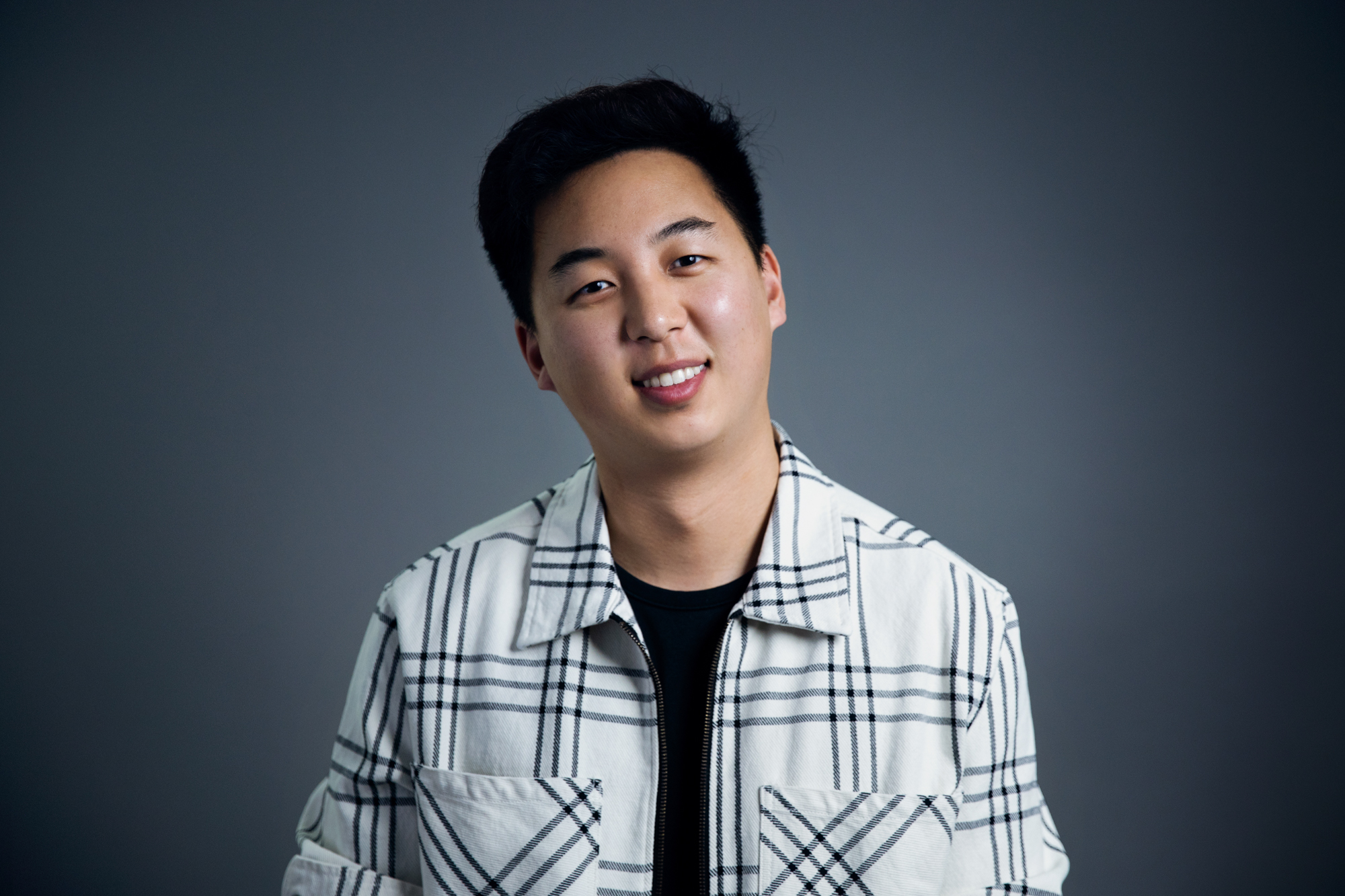
As a kid, Ducky Chang didn’t see his parents often because they worked long hours running a grocery store and other jobs here and there. He saw them working as fluidity and felt encouraged to try anything that interested him. One thing led to another, and he decided to pursue film at California State University. Ducky dropped out two years into school due to an injury, so he took that opportunity to explore whatever he wanted.

Alex Pryor
Alex Pryor was born in DC, grew up in Maryland, and spent many Sundays in Virginia. Being half Black and half Korean, Alex describes his story as “perpetually on a bridge” – often having felt lonely and the need to fit in. When he entered college and joined a group for mixed-race students, it gave him an insight into where he belonged and the tools to understand race, ethnicity, culture, and nationality. Living in Korea has always been a dream, and now that he’s been living there since 2020, it’s been a liberating experience to navigate life on his own terms.