


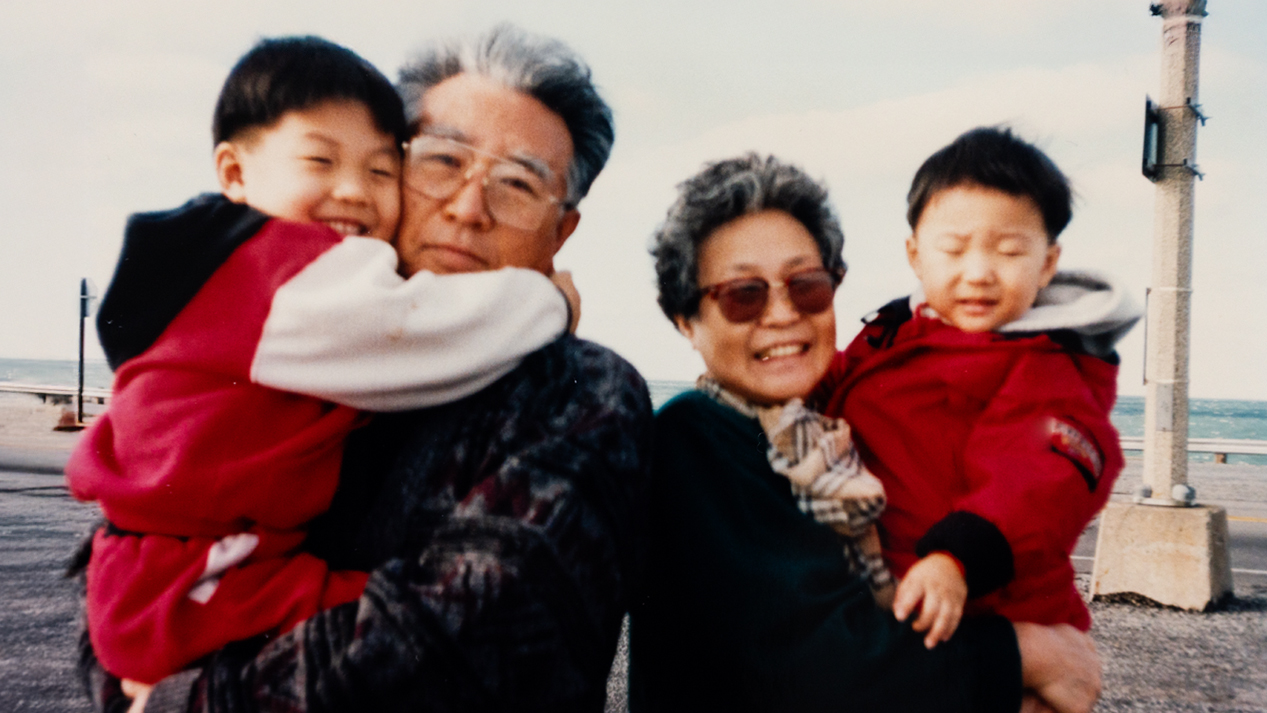


Letters to My Hometown: Jun Family
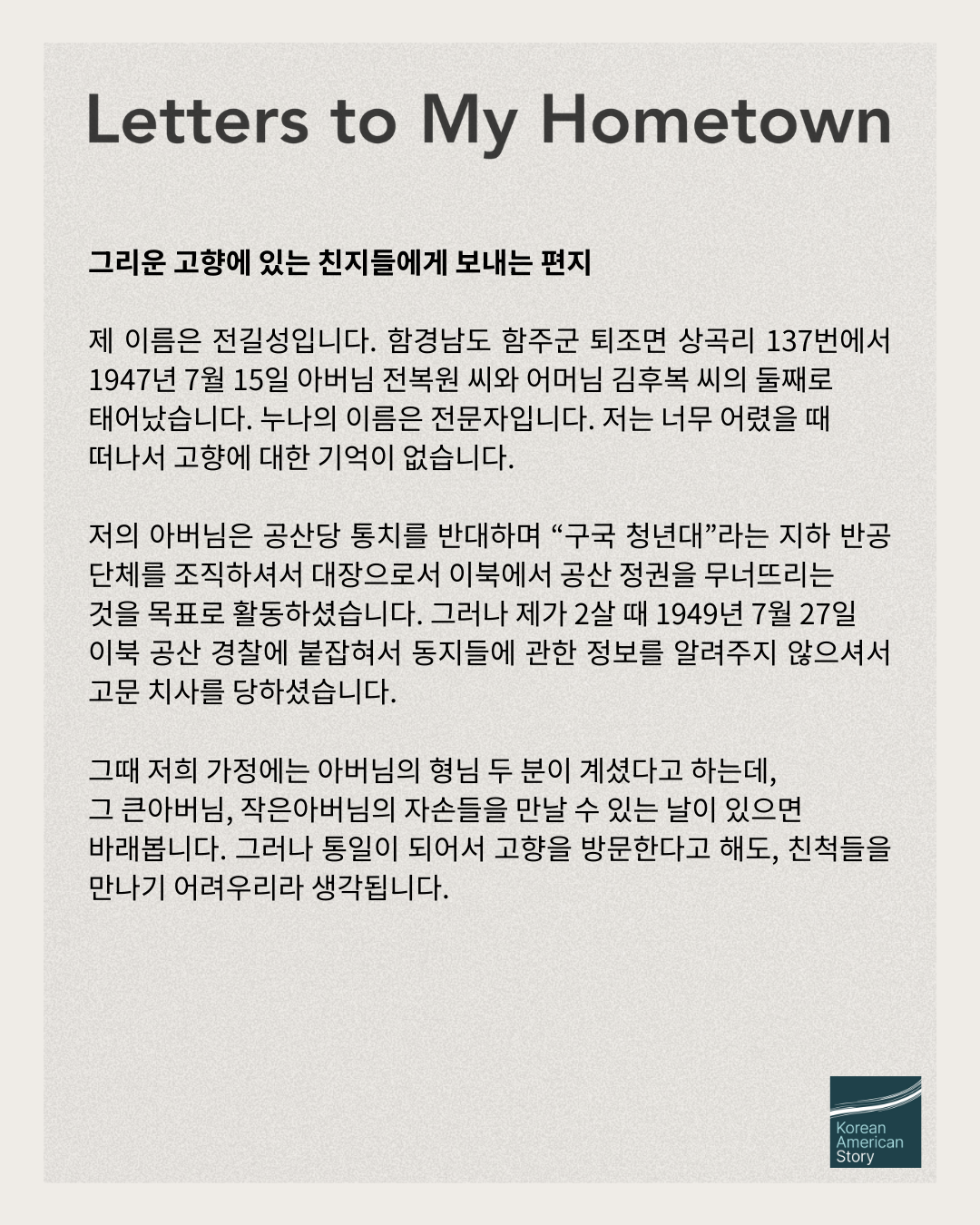
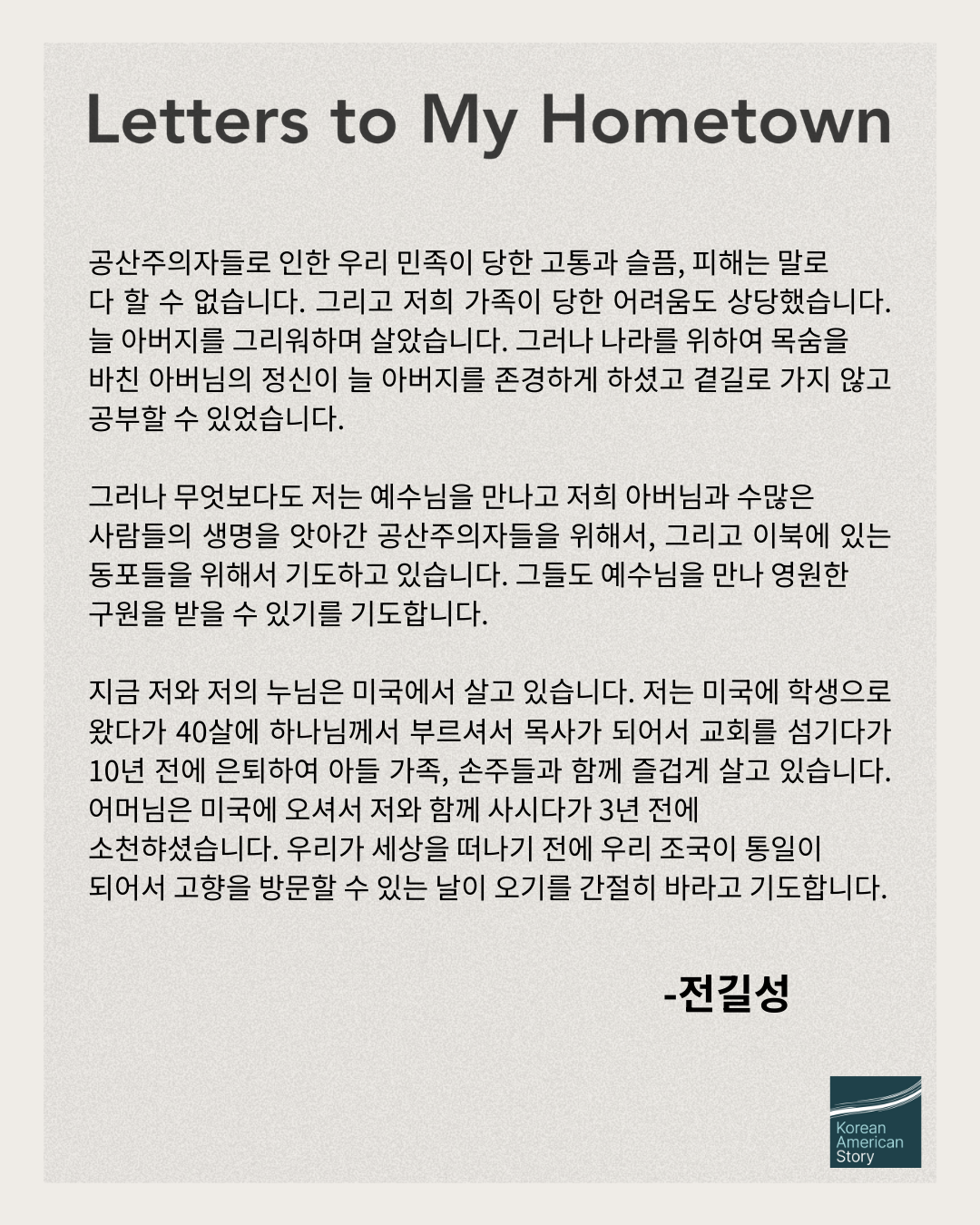
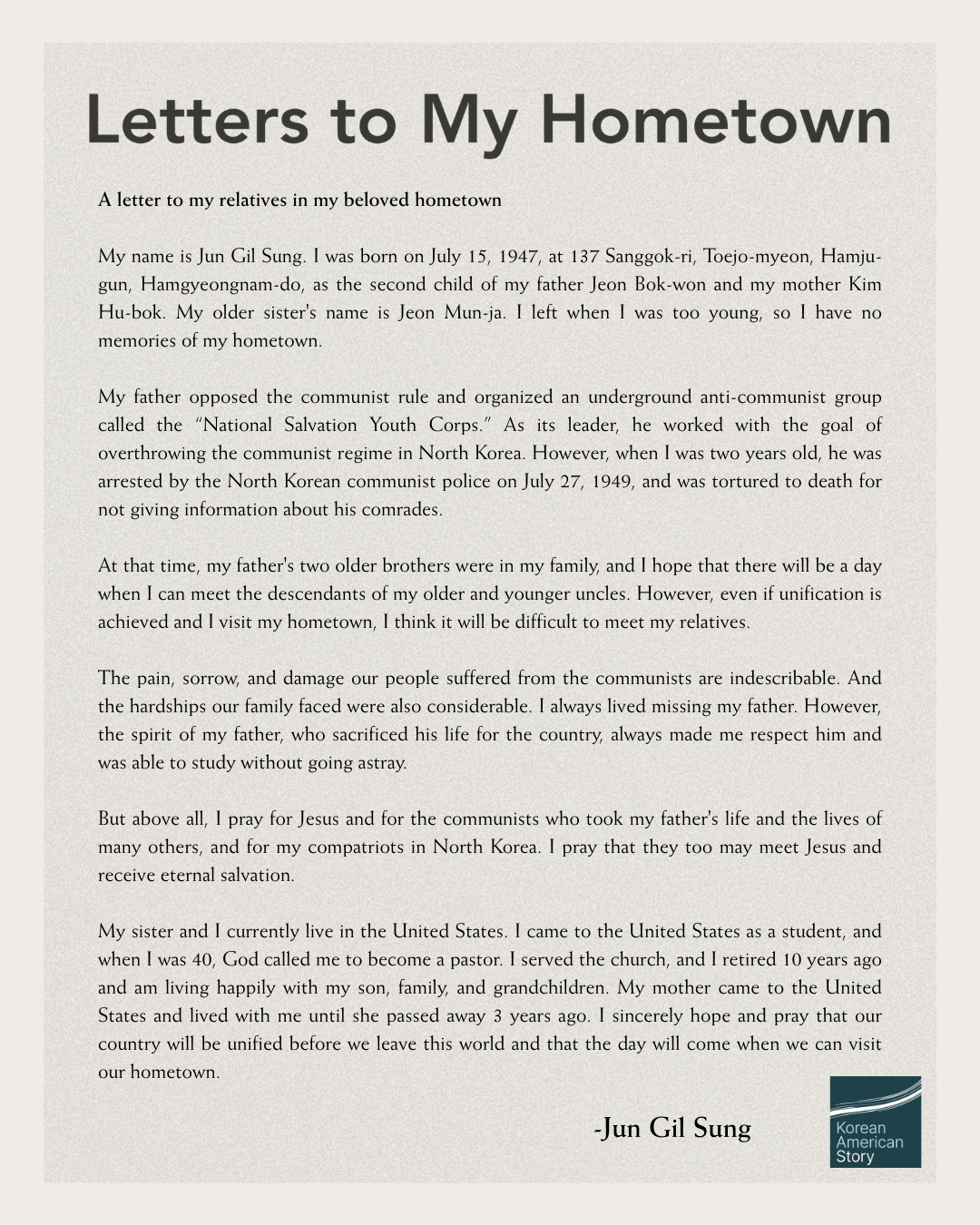
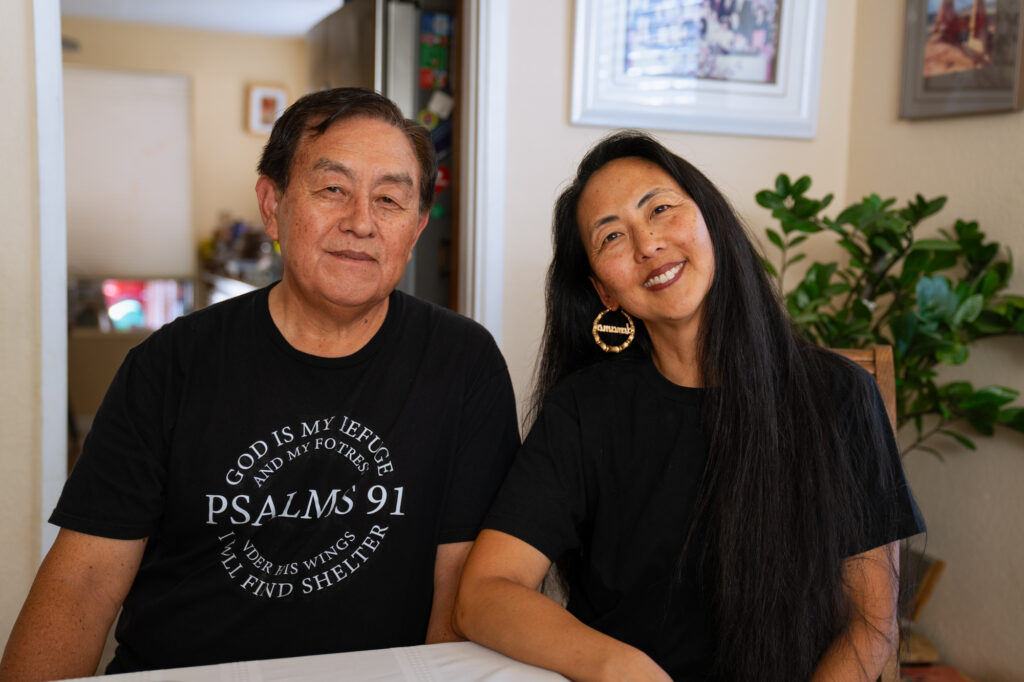
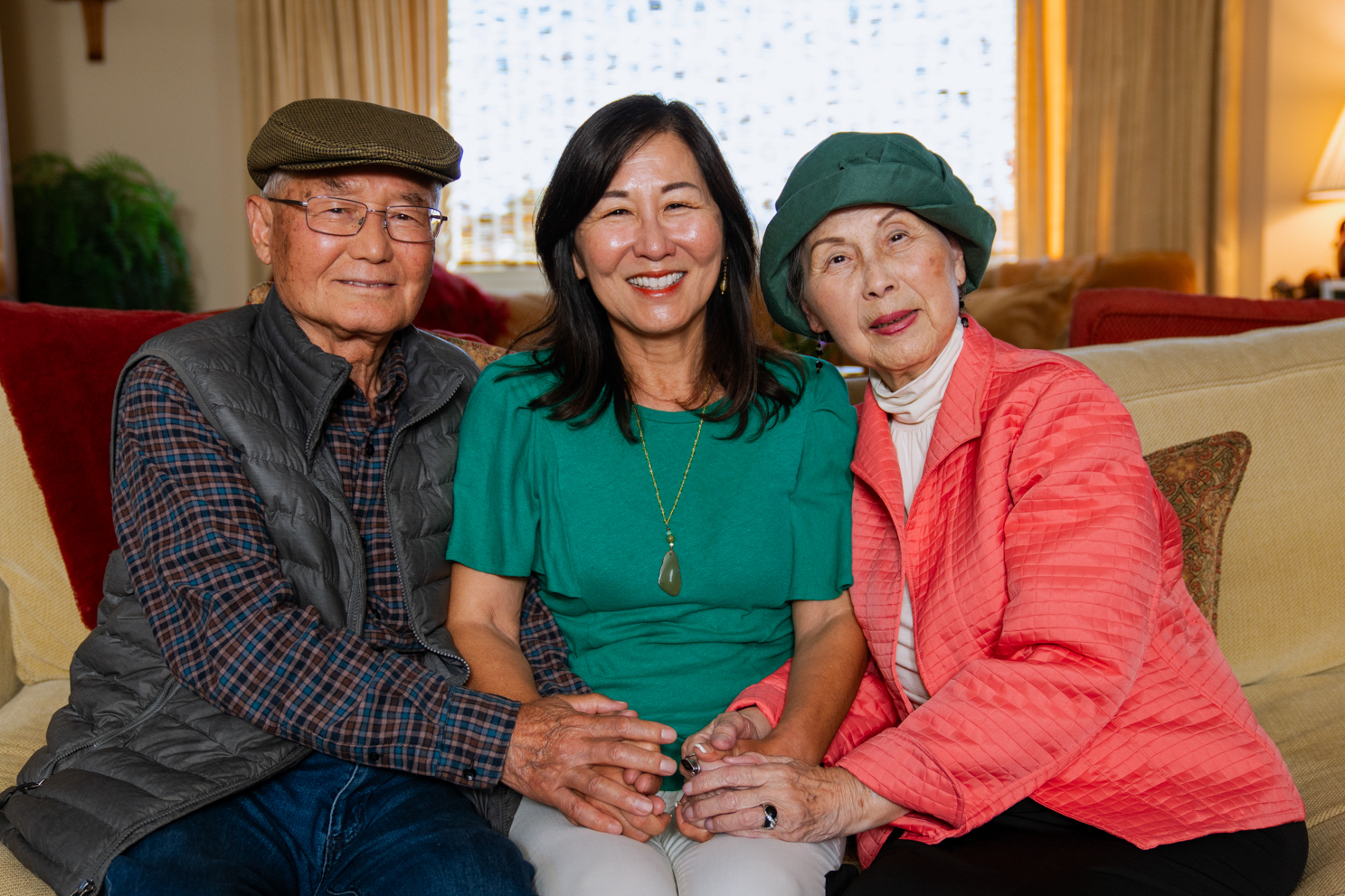
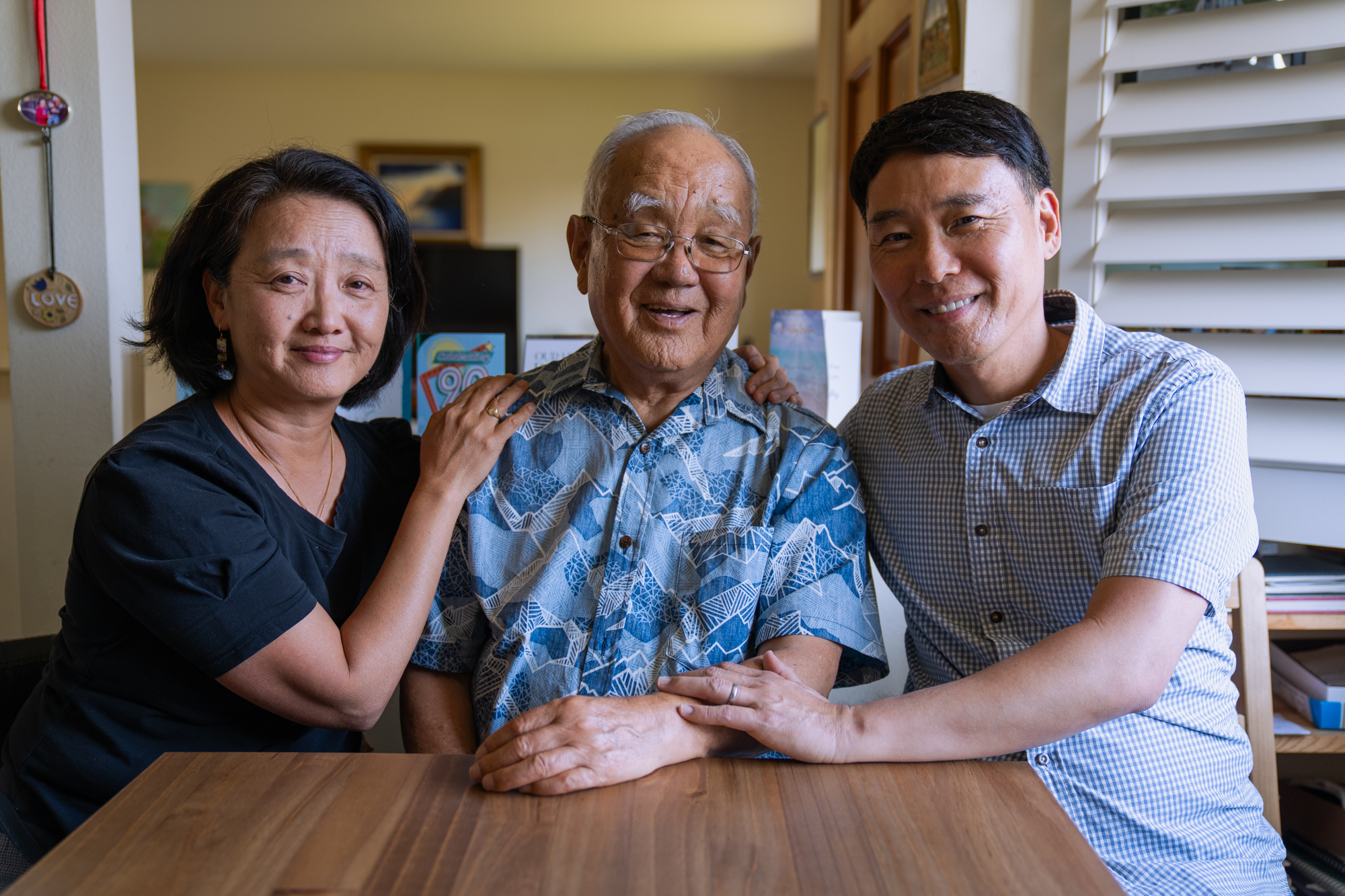
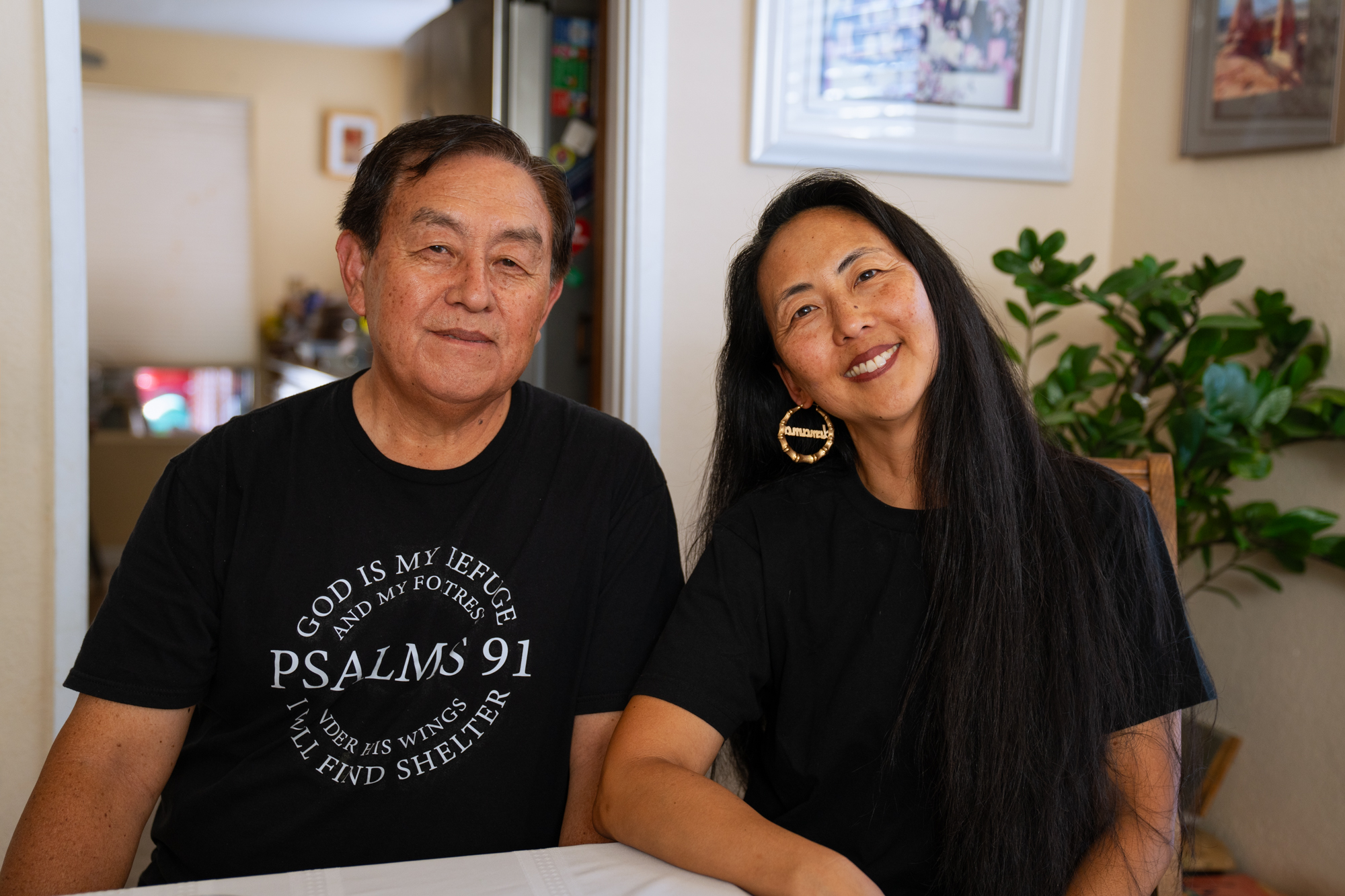
Gil Sung Jun is joined by his daughter, Grace, for a conversation on how love is transmitted and received within families burdened with traumatic histories of war.
The question at the forefront of Gil Sung’s mind, whose father was taken from him when he was just two years old, is whether he was a loving person and husband. He tells Grace that he did not come from a family which freely shared their emotions for and with each other, but also that in his pursuit of ministry and service to faith, he missed developing a closer relationship with his own children. Grace poignantly affirms that he was a good father, and that she sees his care in the relationships he builds with his grandchildren.
On a recent family trip to Korea, Gil Sung took Grace and his grandchildren to Hyochang Park and Namsan, reflecting on the seventy years it took for the country to rebuild itself, though he wishes for a day when the country is fully healed from the pains of war.
Through these lasting memories, Gil Sung and Grace consider what endures beyond what is spoken: the quiet, imperfect, but lasting transmission of love across generations.
The 75 years of division and conflict from the Korean War have not only affected the first generation, who still long for their hometowns in North Korea, but also younger generations who have no memories of the conflict, yet many of whom have inherited the weight of uncertainty and the mission of searching for missing relatives.
This iteration of Letters to My Hometown invites audiences to listen and reflect upon intergenerational conversations of the Korean American community whose divided families have sustained the traumas of their homeland’s partition. Generously supported by American Friends Service Committee (@afsc_org), these conversations aim to take steps toward transforming the intergenerational traumas of the Korean War into opportunities for collective remembering, learning, and healing.